
CNPC USA Wins AMPP “Outstanding Engineering” Award for Redefining Nickel Alloy Boundaries
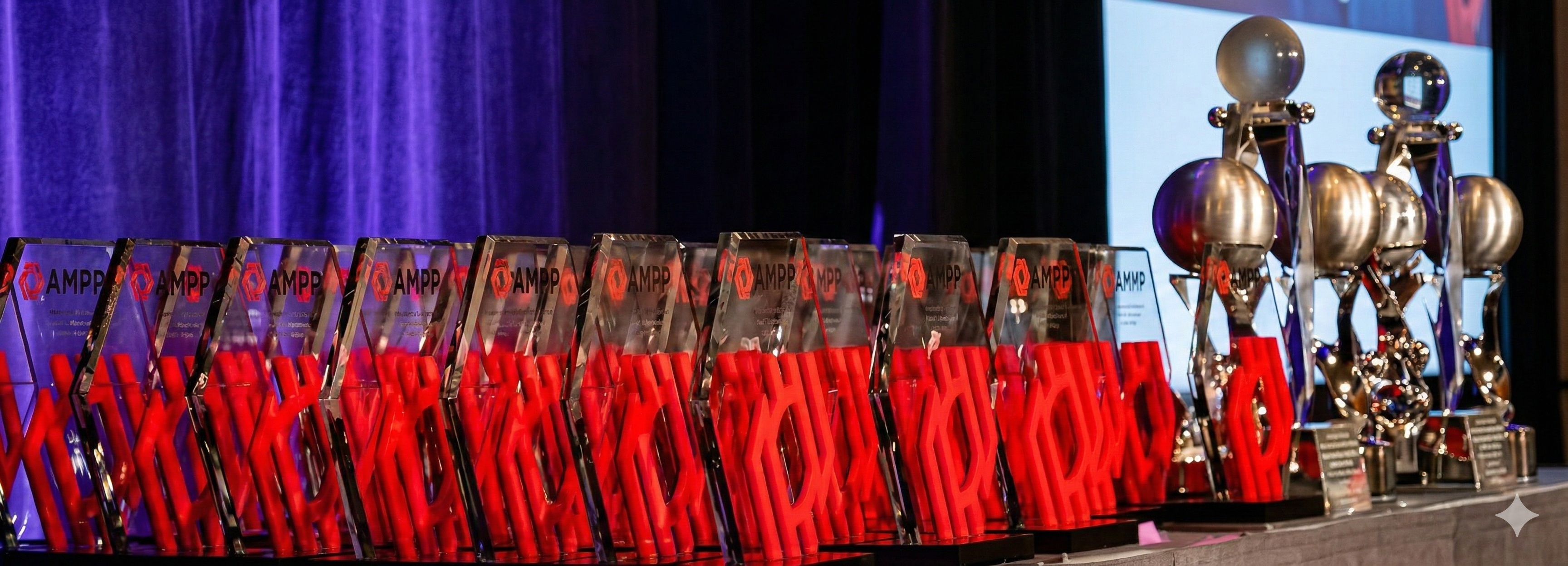
Recognition of technical breakthroughs in materials protection for extreme HTHP sour environments.
Houston, TX, December 3, 2025 — CNPC USA’s research project, "Redefining Ni Alloy Boundaries for Extreme Sour HTHP Conditions," has been honored with the global AMPP Project Award in Outstanding Engineering.
The **AMPP Outstanding Engineering Award** is presented annually to only one project worldwide. It recognizes exceptional achievements in materials protection that demonstrate significant industry impact, technological innovation, and strong application prospects.
Overturning a 50-Year Global Framework
CNPC USA’s research team identified fundamental limitations in the traditional “partial pressure” severity-evaluation method—a framework used globally for over half a century. By proposing a new evaluation approach tailored for extreme high-temperature and high-pressure (HTHP) sour environments, the team successfully expanded the safe usage boundary of **Alloy 718** from the ISO/NACE-specified ~200 psi to nearly **910 psi**.
From Laboratory Innovation to Field Deployment
This breakthrough has already been integrated into tool-material selection workflows for designing high-performance packers used in ultra-high-sour wells. The implementation of this new methodology has led to:
- Safety Validation: Successful completion of high-risk sour-gas testing in CNPC USA’s laboratories.
- Cost Efficiency: Substantial reductions in material and tool costs through optimized selection.
- Standard Revision: Establishment of a scientific foundation for future **ISO/NACE standard upgrades**.
- Industrial Certification: Several domestic suppliers have achieved international certification based on this new framework.
As China and global operators advance ultra-high-sour resource development and CCUS engineering, this new evaluation system will play an increasingly influential role in ensuring the integrity of downhole infrastructure.