CNPC USA CNPC USA

Testing Services

Drilling Fluid Testing Services

HPHT rheology, filtration, lubricity, shale inhibition, LCM and core-flow testing in Katy and Houston, Texas

CNPC USA provides drilling fluid testing services—also commonly searched as drilling mud testing—for operators, drilling contractors, mud companies, chemical suppliers and product developers. Our laboratory supports evaluation of water-based mud, oil-based mud and synthetic-based drilling fluid systems.

Test programs can support fluid qualification, formulation comparison, additive screening, troubleshooting and research under ambient or simulated downhole conditions. Capabilities include rheology and viscosity, HPHT filtration, dynamic lubricity, shale inhibition, lost-circulation-material performance, particle-size distribution, surface and interfacial chemistry, analytical characterization, permeability and core-flow evaluation.

Equipment ratings are not automatic project conditions. Final limits depend on the fluid, sample volume, geometry, test cell, pressure medium, temperature program, safety review and approved procedure.

Capability-first view

Drilling Fluid Testing Capabilities

The sections below are organized by the service customers need. Supporting equipment and practical limits are shown so technical teams can determine whether the installed laboratory capability matches the proposed test program.

01

Drilling Fluid Rheology & Viscosity Testing

Ambient, elevated-temperature and ultra-HPHT flow-property evaluation.

What we can evaluate

  • • Drilling mud viscosity and rheology
  • • Plastic viscosity, apparent viscosity and yield-point related data
  • • Gel strength and time-dependent fluid behavior
  • • Rheological response to pressure and temperature
  • • Water-based, oil-based and synthetic-based mud comparison
  • • Custom shear-rate and temperature programs

Equipment and limits

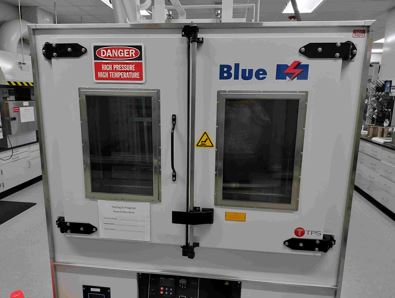
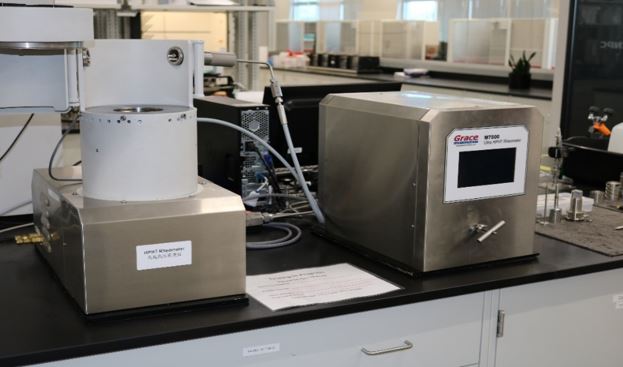
Grace M7500 Ultra HPHT Rheometer: equipment rating up to 30,000 psi and 600°F (315°C). OFITE Model 900 Viscometer: 12 fixed speeds plus variable operation from approximately 0.006 to 1,000 rpm, with a maximum recommended heated-cup temperature of 190°F (88°C). Brookfield Viscometer: broad-range rotational viscosity testing; usable range depends on spindle, speed, sample volume and temperature.
02

HPHT Filtration, Lubricity & Drilling Simulation

Evaluate fluid loss, filter-cake behavior, lubricity and dynamic drilling response.

What we can evaluate

  • • HPHT fluid-loss and filtration performance
  • • Dynamic filtration and filter-cake development
  • • Drilling fluid lubricity and additive comparison
  • • Simulated drilling contact under pressure and temperature
  • • Fluid behavior before and after thermal aging
  • • Water-based, oil-based and synthetic-based fluid performance

Equipment and limits

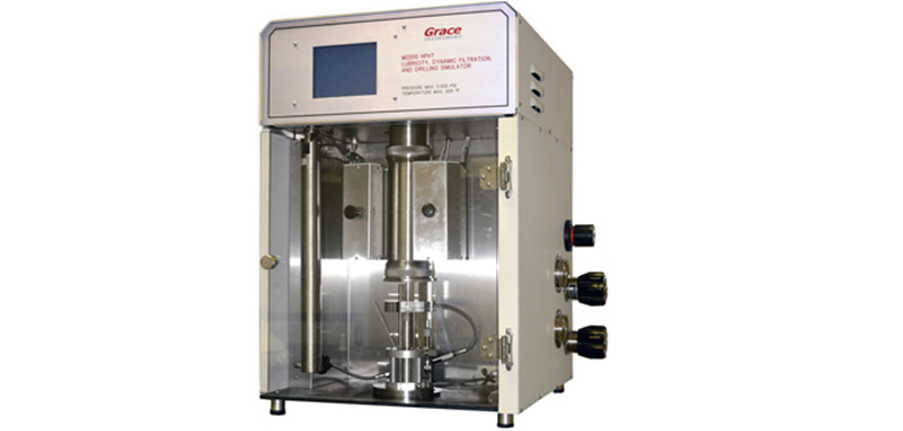
Grace M2200 HPHT Lubricity, Dynamic Filtration & Drilling Simulator: up to 2,000 psi and 500°F (260°C). HTHP Filter Press System: installed system listed up to 15 MPa (approximately 2,175 psi) and 250°C (482°F), subject to the approved cell and pressure configuration. OFITE Lubricity Meter: standard lubricity testing at 60 rpm and 150 in-lb applied load. Aging Roller Oven: controlled thermal aging using approved aging-cell formats.

03

Particle Size, LCM & Permeability-Plugging Testing

Characterize solids and evaluate lost-circulation and bridging performance.

What we can evaluate

  • • Particle-size distribution for powders and suspensions
  • • Drilling additive and weighting-material particle sizing
  • • Lost-circulation-material screening
  • • Bridging and plugging performance across selected slot or pore media
  • • Permeability-plugging and filtrate collection
  • • Comparative LCM formulation testing

Equipment and limits

Malvern Mastersizer 3000: laser-diffraction particle-size range from approximately 10 nm to 3.5 mm, depending on dispersion and sample suitability. OFITE Permeability Plugging / LCM System: installed configuration rated up to 6,000 psi and compatible with selected filter media, ceramic disks or slotted disks.

04

Shale Inhibition, Swelling & Stability Testing

Compare how drilling fluids and additives interact with reactive shale and clay.

What we can evaluate

  • • Linear shale swelling and hydration response
  • • Shale-inhibitor and salt-system comparison
  • • Reactive-clay interaction
  • • Slake durability and shale disintegration resistance
  • • Hot-rolling and aged-fluid effects
  • • Comparative wellbore-stability screening

Supporting equipment

OFITE Linear Swell Meter: time-based shale or compacted-clay expansion measurement. Slake Durability Apparatus: comparative resistance to disintegration during controlled tumbling cycles. Aging Roller Oven: thermal aging and hot-rolling support before or after inhibition testing.

05

Surface Tension, Interfacial Tension & Wettability

Evaluate surfactants, emulsions, wetting and liquid-liquid interface behavior.

What we can evaluate

  • • Surface tension of drilling-fluid phases and additives
  • • Water-oil interfacial tension
  • • Ultra-low interfacial tension
  • • Contact angle and wettability
  • • Surfactant and emulsifier comparison
  • • Critical micelle concentration and interface-related formulation studies

Supporting equipment

KRÜSS K100 Force Tensiometer: surface tension, interfacial tension, contact-angle and selected wettability measurements. KRÜSS Spinning Drop Tensiometer: very-low and ultra-low liquid-liquid interfacial-tension measurement for surfactant and emulsion systems.

06

Chemical, Polymer & Additive Characterization

Support identification, comparison and troubleshooting of fluid components and polymers.

What we can evaluate

  • • FTIR material and functional-group comparison
  • • GC-FID organic-component profiling
  • • LC-MS separation and identification support for selected compounds
  • • Polymer absolute molar mass and size distribution
  • • Additive comparison and contamination troubleshooting
  • • Chemical-reaction and formulation-development support

Supporting equipment

Thermo Scientific Nicolet iS50 FTIR, Agilent 7890B Gas Chromatograph with FID, Thermo Ultimate 3000 liquid-chromatography platform with mass-spectrometry configuration, Agilent SEC with Wyatt DAWN MALS, and a 500 mL high-temperature/high-pressure chemical reactor. Method availability depends on analyte, concentration, sample preparation and approved analytical procedure.

07

Core Permeability & HPHT Core-Flow Testing

Evaluate porous-media flow and the effect of drilling fluids or treatments on core performance.

Core Permeability

Permeability measurement on approved reservoir-rock samples, with the installed Vinci system listed for pressures up to 5,000 psi.

Fluid Invasion & Damage

Compare permeability or flow response before and after exposure to drilling fluids, filtrate or selected treatment systems.

Long-Core Flow

Corrosion-resistant HPHT core-flow support for approved core assemblies up to approximately 12 inches in length; final pressure and temperature depend on the project configuration.

Search and capability match

Common Drilling Fluid Testing Requests

Customers may use different names for the same technical need. The table connects common search terms with the relevant CNPC USA laboratory capability.

Common search or request Related service Primary equipment
Drilling mud rheology testing, HPHT mud viscosity, API rheology Ambient and HPHT rheology, viscosity and gel-strength evaluation Grace M7500, OFITE Model 900, Brookfield
HPHT fluid-loss testing, mud filtration, filter-cake testing Static or dynamic filtration and fluid-loss evaluation Grace M2200, HTHP Filter Press
Mud lubricity testing, drilling lubricant additive test Lubricity coefficient and comparative additive performance Grace M2200, OFITE Lubricity Meter
Shale inhibition testing, linear swell test, clay swelling test Hydration, swelling, inhibition and shale-stability comparison Linear Swell Meter, Slake Durability Apparatus, Roller Oven
LCM testing, lost circulation material testing, plugging test Particle sizing, bridging and permeability-plugging evaluation Mastersizer 3000, OFITE LCM / PPT System
Surface tension, interfacial tension, ultra-low IFT, wettability Surfactant, emulsion, contact-angle and liquid-interface testing KRÜSS K100, KRÜSS Spinning Drop Tensiometer
Drilling fluid chemical analysis, polymer molecular weight, FTIR Chemical identification, organic profiling and polymer characterization FTIR, GC-FID, LC-MS, SEC-MALS
Core permeability, mud invasion, drilling fluid formation damage Permeability and core-flow response before and after fluid exposure Vinci Permeator, HPHT Core Flow System

Laboratory equipment

Drilling Fluid Testing Facility

Grace M7500 Ultra HPHT rheometer for drilling fluid rheology testing up to 30,000 psi and 600 degrees Fahrenheit
Grace M2200 HPHT drilling fluid lubricity filtration and drilling simulation system
HPHT core flow system for drilling fluid invasion and permeability testing

Project scoping

What to Include in a Drilling Fluid Testing Request

Clear technical information helps the laboratory confirm feasibility, select the correct equipment and prepare an accurate scope.

  1. 1.Fluid type: water-based, oil-based, synthetic-based or additive sample
  2. 2.Test objective or field problem to investigate
  3. 3.Applicable API, ASTM, ISO or customer procedure
  4. 4.Required pressure, temperature, shear history and duration
  5. 5.Available sample volume and any hazardous constituents
  6. 6.Acceptance criteria, comparison fluids and reporting needs

Common questions

Drilling Fluid Testing FAQ

What drilling fluid testing services do you provide?

We support rheology, viscosity, HPHT filtration, fluid loss, lubricity, dynamic drilling simulation, shale inhibition, linear swell, slake durability, LCM and permeability-plugging evaluation, particle-size analysis, surface and interfacial tension, chemical characterization, core permeability and core-flow testing.

Can you test oil-based and synthetic-based mud?

Yes. The laboratory supports evaluation of water-based, oil-based and synthetic-based drilling fluid systems. Final compatibility, sample quantity and safety requirements are confirmed during project review.

What is the maximum HPHT rheology capability?

The Grace M7500 is rated up to 30,000 psi and 600°F. Actual test conditions may be lower depending on fluid chemistry, sample volume, geometry, pressure medium, safety limits and the approved test procedure.

Can you evaluate lost circulation materials?

Yes. We can combine particle-size analysis with permeability-plugging or LCM testing using selected filter media or slotted disks. The installed LCM configuration is rated up to 6,000 psi.

Can you measure surface and interfacial tension?

Yes. The laboratory supports surface tension, liquid-liquid interfacial tension, contact-angle and wettability measurements. A spinning-drop system supports very-low and ultra-low interfacial-tension evaluation.

Where is the drilling fluid laboratory located?

The laboratory is located at 22130 Merchants Way, Suite 190, Katy, Texas 77449, serving Houston, the Gulf Coast, the United States and customers worldwide.

Discuss Your Drilling Fluid Testing Program

Send the fluid type, sample quantity, required pressure and temperature, applicable method, test objective and reporting requirements.

Contact the Drilling Fluid Lab
Laboratory Expert

Meng Lu

Direct Contact meng.lu@cnpcusa.com +1 (713) 972-6581
Laboratory Location

22130 Merchants Way, Suite 190
Katy, TX 77449

Related Service

Need hydraulic fracturing fluid evaluation? View Fracturing Fluid Testing.